
So we’re helping you skip all that guesswork. We’ve gone straight to the source, taking the time to crawl through what Queensland councils across the state actually publish on who is responsible for storm water drains QLD wide, not just here in Caboolture.
The good news? Despite covering all the different regions of the state, Queensland councils are mostly saying the same handful of things.
Here’s what they all agree on.
1. Everything on your property is on you
Every single QLD council is crystal clear on this one.
You are responsible for:
- Your gutters
- Your downpipes
- Your private pipes
- Your gully pits.
Not just that, you’re also responsible to install and maintain anything else that carries rainwater away from your house, up to the point where it connects to the council system. In other words, nobody’s coming to clean your gutters for you – and nobody but a plumber you pay is coming to clear a blocked pipe under your driveway either. That part’s all on the homeowner, every time.
2. Once it hits public land, it’s council’s job
The flip side is just as clear and consistent.
The council is responsible for:
- Roads
- Kerbs
- Parks
- The wider network of pipes and pits that carry water away from streets and public spaces.
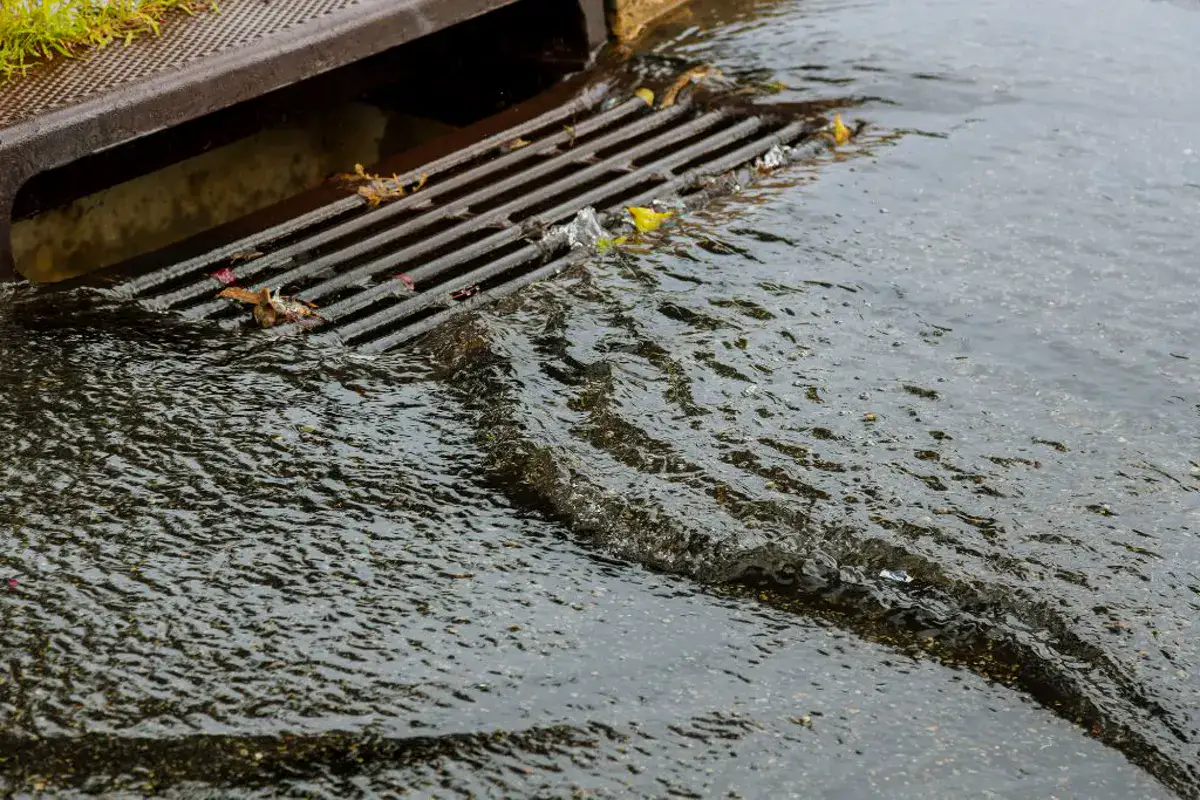
If a public drain near your place is clogged and water’s pooling on the road, that’s finally a job for them, not you. Most councils have an online form for exactly this, so it’s worth reporting rather than assuming someone else already has.
3. The rules on getting water away from your house are basically the same everywhere
Every council we checked treats stormwater drainage almost identically once you get past the postcode differences. Roof water and surface runoff has to end up at a legal point of discharge, whether that’s the street kerb, a council pipe, or an approved on-site system.
4. Natural water flow isn’t your fault, but changing it can be
Now we get into a part that can catch some homeowners out.
If water naturally flows from a higher block down onto yours, that’s just how the land sits – and your neighbour isn’t liable for it.
Downstream properties are generally expected to accept that natural flow, whether it’s storm season or not. But the moment someone alters that flow, they can then become responsible for the damage it causes.
Things like:
- Landscaping
- Retaining walls
- A new driveway
- Anything else that concentrates or redirects water onto a neighbouring property.
5. Neighbour disputes aren’t a council matter
Now, just because your neighbour’s stormwater may be causing you grief, most councils are upfront that they have limited power to intervene.
It’s treated as a civil matter between the two property owners. The official next step, according to the Queensland Government, is free mediation through a Dispute Resolution Centre – so don’t bother calling council, except maybe to be told just that.
Don’t be put off the idea of mediation, though. It’s a lot less daunting than it sounds, and it’s designed specifically to keep these situations out of court.
Before it even gets to that point though, most councils recommend the obvious first move: just talk to your neighbour. A surprising number of these disputes get sorted with a five-minute conversation over the fence, once both sides actually understand who’s meant to be doing what.
6. Easements complicate things, but only sometimes
Some properties, particularly in newer estates, have a registered drainage easement running through them.
- If that easement was a condition of council approval when the estate was developed, council usually maintains it.
- If it was something the developer added privately to improve drainage across the block, it’s considered private infrastructure, and the benefiting property owners are on the hook for its upkeep.
It’s probably something you’d never really think about until you’re trying to sell – and a buyer’s solicitor starts asking questions. Worth checking your title though if you’re not sure which applies to you.
What This Actually Means For You
So, if we were to summarise the stormwater runoff regulations Qld homeowners need to know, it’s this:
- If the problem’s on your side of the boundary, it’s yours to sort.
- If it’s out past the kerb, ring council.
- If you’re stuck in the middle of a dispute with a neighbour, save yourself the stress and go straight to mediation rather than waiting on council to step in.
It’s also worth doing a quick check before storm season hits, rather than waiting until you’re standing in ankle-deep water wondering whose fault it is. It can be as simple as looking at your gutters, downpipes and any visible drainage points for signs of trouble at least once a week. If you notice pooling water, slow drainage or overflowing gutters, it may be worth looking into stormwater drainage solutions before the next heavy downpour, especially with how intense Queensland’s wet season has been getting.
If you’re dealing with a blocked stormwater drain Caboolture weather has been making worse lately, and it’s on your property, that’s exactly where we come in.
We’ll:
- Clear it properly
- Check for any underlying cause like root intrusion or a collapsed pipe
- Make sure it’s actually fixed rather than just cleared for now.
And if it turns out the problem’s actually council’s, we’ll tell you that too. Genuinely not sure whose problem it actually is? Give us a call, we’ll have a look, and then go from there. Reach out to the friendly team at Caboolture Plumbing and Hot Water today.