
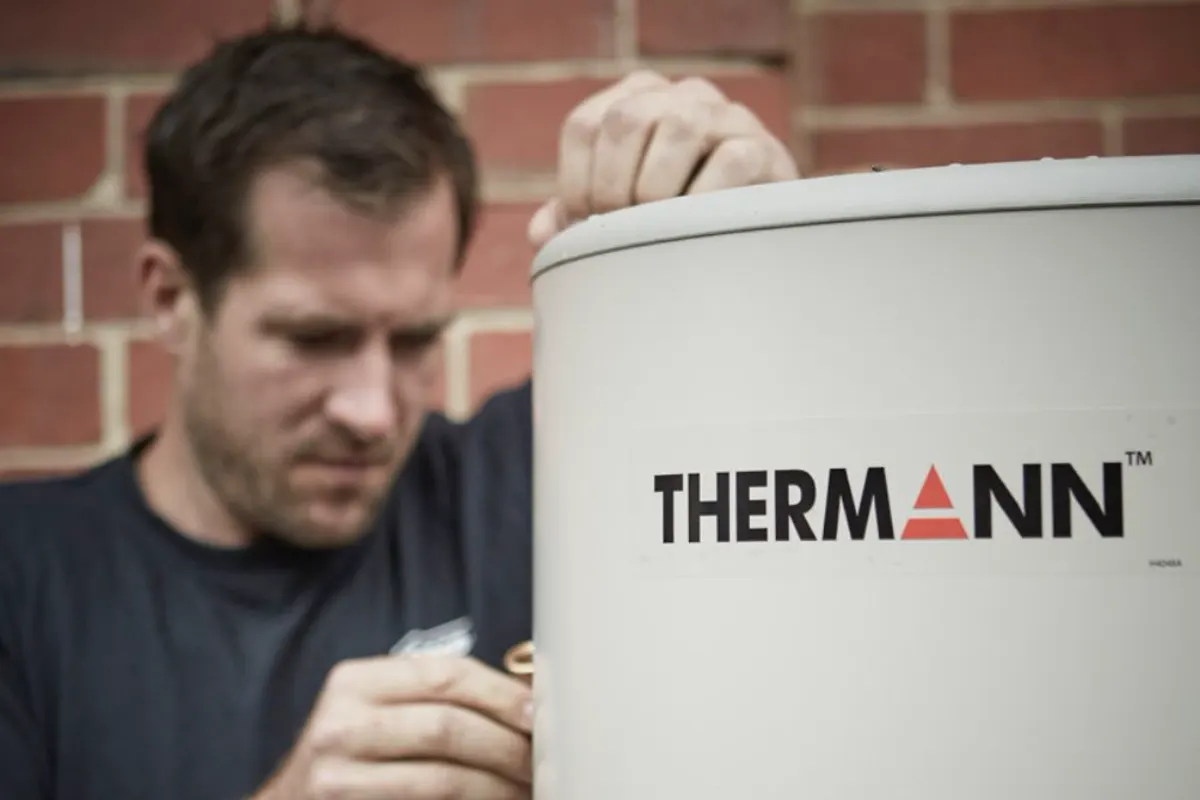
Thermann for reliability
Did you know that many Thermann units are actually manufactured by Rinnai and distributed through Reece? That means they’re backed by super-solid engineering and strong industry support. And whether you have a storage unit, continuous flow model like the Thermann 26, or even a Thermann heat pump, they’re really designed to last.
But we understand that you’re here because yours is on the blink.
Is your Thermann hot water system:
- Not heating properly?
- Showing an error code?
- Stopped working altogether?
Let’s start with the simplest checks first. If the problem is resolved at any step, great – you’re done. If not, just move on to the next one.
How this guide works
Simply start at Step 1 and work your way down. Each step rules out common and easy-to-fix causes before moving into more technical territory.
If at any point you’re unsure, smell gas, see water leaking heavily, or feel uncomfortable proceeding – stop and contact a licensed plumber immediately.
Step 1: Check your power supply
Even gas hot water systems rely on electrical power for ignition and controls.
- Is the unit plugged in (for continuous flow systems)?
- Has the power point tripped?
- Has the circuit breaker switched off at the switchboard?
Reset any tripped breaker once. If it trips again, stop there – that indicates a deeper electrical issue.
If restoring power fixes your Thermann hot water – congratulations, you’ve solved it. If not, move to Step 2.
Step 2: Check your gas supply
If you have a gas Thermann hot water system (including Thermann 26 continuous flow units):
- Is your gas bottle empty (for LPG systems)
- Has the gas valve been turned off?
- Are other gas appliances working (cooktop, heater)?
If other gas appliances aren’t working, the issue may be supply-related rather than system-related.
If the gas supply is fine and your Thermann hot water still isn’t firing, continue to Step 3.
Step 3: Look for error codes (Continuous flow models)
Many (most) Thermann hot water systems, especially continuous flow models, display error codes.
The most common ones include:
11 – Ignition failure: The unit tried to ignite but didn’t detect flame. Often gas supply, air in line, or ignition electrode related.
12 – Flame failure: Flame was detected but went out during operation. Can indicate gas pressure issues or combustion problems.
14 – Overheat / thermal fuse activation: The unit overheated internally. Requires professional inspection.
16 – Over temperature warning: Water temperature exceeded safe limits, sometimes caused by scale build-up or sensor faults.
32 – Outlet temperature sensor fault: Sensor issue affecting temperature control.
33 – Heat exchanger sensor fault: Internal sensor malfunction.
61 – Combustion fan fault: Fan motor issue affecting airflow.
71 – Solenoid valve fault: Gas valve control issue.
Seeing one of these or something else? First:
- Try turning the unit off at the power point for 30-60 seconds
- Restarting it.
Quite often, this can easily reset minor faults. If so – great!
But if the code reappears, note it down. That information will help your hot water plumber diagnose the issue faster.
Step 4: Check water flow & pressure
Continuous flow systems require minimum water pressure to activate.
- Are you getting strong cold water pressure?
- Has a tap aerator recently been replaced or blocked?
- Are multiple outlets running at once?
Low flow can prevent ignition, especially with instant gas systems.
If restoring normal pressure fixes the issue – you’re sorted. If not, keep going …
Step 5: Is your water temperature fluctuating?
If your Thermann hot water is running hot-cold-hot:
- Check if multiple taps are being used at once
- Ensure temperature controllers haven’t been adjusted
- Look for partially blocked filters or scale build-up.
Be aware that temperature instability can also indicate internal component wear, especially in older systems.
If the fluctuations continue, move to Step 6.
Step 6: Storage system checks
If you have a gas storage Thermann hot water system:
- Is the pilot light out?
- Can it be relit safely according to manufacturer instructions?
- Is there visible leaking from the tank?
If the pilot won’t stay lit, this often points to a thermocouple issue – which requires professional hot water repair.
If the tank itself is leaking from the base, this may indicate internal corrosion – and replacement is often necessary.
Step 7: Thermann heat pump checks
If you have a Thermann heat pump:
- Is the unit running loudly or continuously?
- Is the fan operating?
- Has the weather been unusually cold?
Heat pumps rely heavily on ambient temperature. In cooler conditions, they may switch to backup heating.
If the system isn’t heating at all, or shows persistent faults, professional diagnostics are required.
When to call a professional
If you’ve reached this point and your Thermann hot water system still isn’t working properly, it’s time to bring in a licensed plumber.
Common professional repair issues for Thermann units include:
Gas valve failure: On Thermann continuous flow systems (including the Thermann 26), internal gas solenoid valves can fail or stick, often triggering error code 71 and preventing ignition or consistent flame.
Ignition electrode faults: Thermann instant units rely on spark ignition electrodes that can become carboned up or misaligned over time, leading to error 11 (ignition failure) or 12 (flame failure).
Heat exchanger problems: In hard water areas, scale build-up inside the Thermann heat exchanger can cause overheating issues, sometimes triggering code 14 or 16 and reducing system efficiency.
Sensor failures: Thermann systems use multiple thermistors (outlet and heat exchanger sensors), and when these drift or fail, they often produce codes like 32 or 33 and cause unstable temperature control.
Control board faults: Power surges or moisture intrusion can damage the PCB (printed circuit board) inside Thermann units, leading to repeated unexplained shutdowns or persistent fault codes.
Internal corrosion (storage models): In Thermann gas storage systems, sacrificial anode depletion can lead to tank corrosion, which may present as rust-coloured water or leaking from the base of the cylinder.
These definitely aren’t DIY jobs – and attempting repairs yourself can void warranties or create safety risks.
We know thermann systems
Here at Caboolture Plumbing and Hot Water, we regularly repair and replace Thermann hot water systems of all types – including storage, instant models like the Thermann 26, and Thermann heat pump systems.
Because we work with Thermann hot water units so frequently, we can often diagnose issues quickly based on symptoms and error codes alone. Whether it’s a minor ignition fault or a full system replacement, we’ll give you honest advice about the most cost-effective solution.
Sometimes it’s a simple repair. But at other times, especially with older units, replacement makes more long-term sense.
Either way, we’ll explain your options clearly so you can make an informed decision.
Still having trouble?
If our Thermann hot water system troubleshooting guide hasn’t resolved the issue, don’t stress – that’s what we’re here for!
Call Caboolture Plumbing and Hot Water today to speak with a licensed professional who understands Thermann hot water systems inside and out.
We’ll get your hot water back up and running safely – and as quickly as possible.