
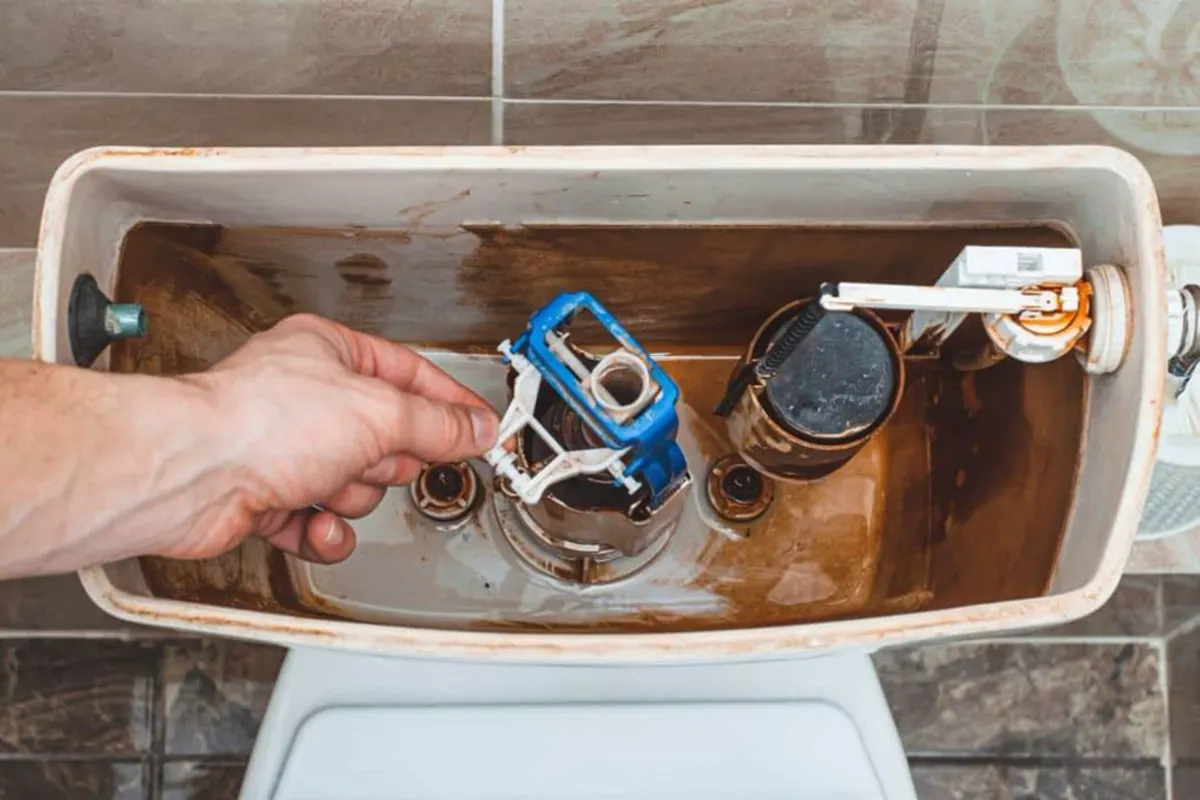
There’s plenty of advice online about how to clean toilets, but far less information about how to clean a toilet cistern – even though it plays a big role in:
- Hygiene
- Water quality
- How well your toilet works.
Over time, the inside of a toilet cistern collects all sorts of muck – from sediment to bacteria and mould to mineral build-up and beyond. Every time you flush, that water ends up in the bowl – which means a dirty cistern can undo all your hard work.
We’ve come up with a simple, step-by-step guide absolutely anyone can follow to safely clean and disinfect their cistern at home. Then, we’ll follow up with some advice about when the time simply comes to call a licensed plumber instead.
How to clean the inside of a toilet cistern (Step by step)
Before getting started, you’ll need:
- Gloves
- A soft sponge or cloth
- White vinegar or mild disinfectant
- An old toothbrush or small scrub brush
- A towel or small bucket.
Try to avoid harsh chemicals altogether – we’ll explain why later.
1. Turn off the water supply
Locate the isolation valve behind or beside the toilet and turn it clockwise to shut off the water. Flush the toilet once to empty most of the water from the cistern.
Now you’ll have safe access to clean the inside of the toilet cistern properly.
2. Remove the cistern lid carefully
Lift the lid straight up and place it somewhere safe – cistern lids are heavier and more fragile than they look.
You’ll now see the internal components of the toilet tank, including the fill valve, float, and flush mechanism.
3. Inspect the inside of the toilet cistern
Before getting stuck into the cleaning, take a moment to look inside.
Common things you may notice:
- Brown or sandy sediment at the bottom
- Slimy residue on the sides
- Black mould spots
- Mineral scale from hard water.
This build-up is common, especially in older homes, and is exactly why learning how to clean toilet cistern Australia-style – with our particular water conditions – really matters.
4. Remove loose sediment & debris
Use a cloth or sponge to wipe out any loose debris from the bottom of the cistern. Seeing a lot of sediment? Scoop it out gently with a small container.
What you should NOT do is flush this debris down the toilet. Instead, dispose of it in the bin.
5. Clean the inside surfaces
Pour white vinegar directly onto the sides of the cistern and any visible build-up. Let it sit for 10-15 minutes to break down mineral deposits and bacteria.
Then:
- Use a sponge or cloth to wipe all internal surfaces
- For tight areas around fittings, an old toothbrush works well.
This step is the core of how to clean the inside of a toilet cistern safely and effectively.
6. (Gently) Clean the internal components
Lightly wipe the float, fill valve, and flush mechanism. These parts don’t need scrubbing – just remove residue and slime.
Avoid forcing or bending any components. If something looks cracked, brittle, or corroded, make a note of it.
7. Disinfect the cistern
Once clean, you can disinfect by:
- Adding a small amount of diluted vinegar
- Or using a mild, non-corrosive disinfectant.
Never use bleach tablets or drop-in cleaners inside the toilet tank – they can damage seals and cause leaks over time.
8. Refill & flush
Turn the water supply back on and allow the cistern to refill. Flush the toilet 2-3 times to rinse everything through.
Your cistern is now clean, disinfected, and ready to go.
Why cleaning your toilet cistern really matters
Cleaning the cistern may feel like overkill, but it’s not just another job to tick off, and it’s not even just about appearances.
It has real benefits.
Improves hygiene: Cleaner water means a cleaner bowl.
Reduces odours: Slime and bacteria cause lingering smells.
Prevents staining: Sediment leads to brown streaks in the bowl.
Protects components: Build-up shortens the life of valves and seals.
Improves flush performance: Less resistance = better flushing.
It’s why knowing how to clean inside of toilet cistern systems properly is an often-missed but valuable part of home maintenance.
When cleaning isn’t enough (And you need a plumber)
Sometimes, cleaning won’t fix the problem. You may need a licensed plumber if you notice:
- Cracked or leaking cistern walls
- Corroded or failing internal valves
- Constant running water
- Poor flushing even after cleaning
- Water leaking into the bowl continuously.
In these cases, replacing or upgrading the cistern is often the safest and most cost-effective option – and it must be done by a licensed plumber.
Need help with your toilet or cistern?
Is your toilet cistern playing up? Is it leaking, constantly running – or well beyond a simple clean? The friendly team at Caboolture Plumbing and Hot Water can help.
Reach out now, or book a licensed local plumber to inspect, repair, or replace your toilet cistern properly. We’ll see you soon!