
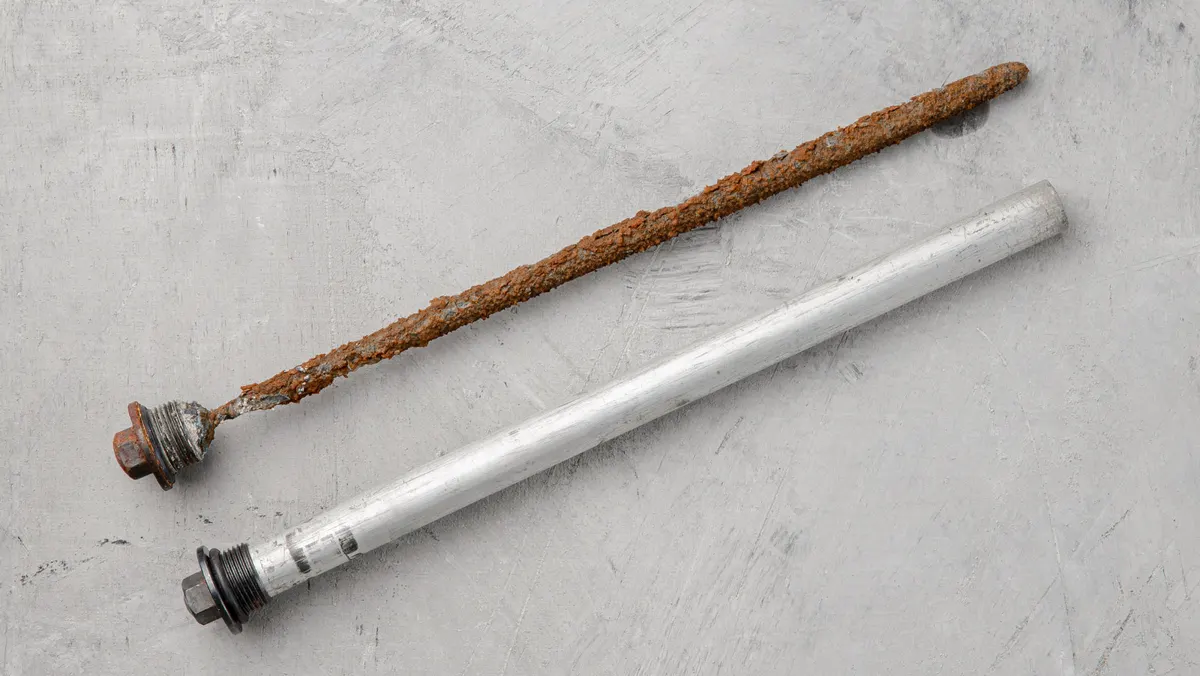
Think of it as the bodyguard of your tank – its whole purpose is to wear out so the steel lining doesn’t. Because once the steel wears and corrodes, your expensive hot water system is junk.
That rod is officially called the sacrificial hot water system anode – otherwise known as the anode rod. And every storage tank-based system in Australia relies on one.
It’s really simple:
- When the anode is healthy, your tank stays protected.
- When it’s gone, corrosion starts almost immediately.
And here’s the kicker – that simple anode for hot water system tanks fails faster in Queensland than in most parts of the country.
Why?:
- Our heat
- The minerals in our water
- Our water chemistry
- Our climate.
They all hit these rods harder than most people realise.
Before we get deeper into the reasons for super-fast anode wear, here’s the quick version:
If you live in places like Morayfield, Bellmere, Burpengary, Narangba, or basically anywhere nearby, an anode check every 3-5 years is the smartest thing you can do for your system.
It costs very little, takes very little time – and saves a lot of money.
So – What exactly is this anode thing?
Every tank system has a metal rod inside called the anode hot water system component. It’s usually made of magnesium or aluminium and is designed to break down before the tank does. That’s why it’s called a sacrificial anode hot water system part – it’s designed to literally sacrifice itself so the steel tank doesn’t corrode.
The problem? In Queensland, the hot water anode can wear out far quicker than the national average.
Here’s why:
5 Reasons anode rods wear out fast in Queensland
These are the reasons your anode rod dies early – based on actual water and climate conditions across our region, not the generic textbook explanations.
1. Harder water means the anode works overtime
Large parts of South-East Queensland have mineral-heavy water. Magnesium and calcium in the supply accelerate corrosion inside the tank. The more minerals in your water, the faster the anode is consumed doing its job.
This means an anode that might last six years in another state can be almost gone in three up here.
2. Hotter weather speeds up corrosion inside the tank
Your tank doesn’t live in a climate-controlled bubble. Queensland heat warms the system all year round, and higher temperatures accelerate chemical reactions inside the cylinder.
That’s why the anode for hot water system tanks in warmer climates tends to burn out quicker – it’s literally reacting faster.
3. Higher usage = Faster wear
Families in Caboolture and surrounds often have high hot water demand – more showers, more laundry, more cycles through the tank. Every time water enters the system, the anode is working.
Bigger families means faster consumption of the rod.
4. Sediment & mineral build-up bury the anode
Sediment settles at the bottom of the tank – and over time, it can build up around the anode. When this happens, the rod has to work even harder to protect the tank walls. That extra workload shortens its lifespan significantly.
Sediment is extremely common in Queensland’s water supply. It’s not dangerous – but it is rough on tanks.
5. Poor installation or old tanks make it worse
Older tanks or budget models sometimes use cheaper anodes that don’t last as long. We also see tanks installed in:
- Full sun
- Cramped corners
- High-moisture areas.
What do those conditions all have in common? Increased wear.
If your tank is over 8 years old and has never had an anode check, it’s almost guaranteed the rod is long gone – and your precious tank is next.
What happens when the anode is gone?
Once the anode is used up, corrosion immediately shifts to the steel tank – which isn’t fixable.
Common early-warning signs include:
- Water smelling metallic
- Brown tinge in hot water
- Popping or rumbling noises
- Hot water dropping off
- The system heating unevenly
- Tiny leaks appearing at seams or fittings.
If you ignore these signs, the next step is a full tank failure – and an expensive replacement when you could least afford it.
How often should you get it checked?
For most Queensland homes, every 3-5 years is ideal. But consider an anode inspection every 2-3 years if you have:
- Bore water
- Hard water
- Or a large household.
The check itself is quick, inexpensive, and massively increases the lifespan of your system. A new anode is cheap compared to a full hot water replacement, which is exactly why plumbers consider it the best-value maintenance job you can do on a tank system.
Is it simple for a plumber to replace?
Yes! In fact, it’s one of the easiest, fastest and most affordable maintenance tasks for a professional. We:
- Remove the old rod
- Fit a new one
- Check the condition of the tank
- Flush sediment if needed
- Make sure everything is running smoothly.
The whole job is straightforward, clean – and prevents thousands of dollars’ worth of damage.
Most homeowners don’t even realise their system had an anode until the day it fails. But a quick replacement keeps your tank healthy for years.
Need an anode check in Caboolture?
We’re here to help. If your hot water is smelling, discoloured, noisy, or your system hasn’t had an anode inspection in years (or ever), it’s time to get it checked properly.
Caboolture Plumbing and Hot Water can inspect your anode, replace it if needed, and keep your system running longer – all with fast, affordable service.
Contact us for a quick water heater anode check or replacement.