
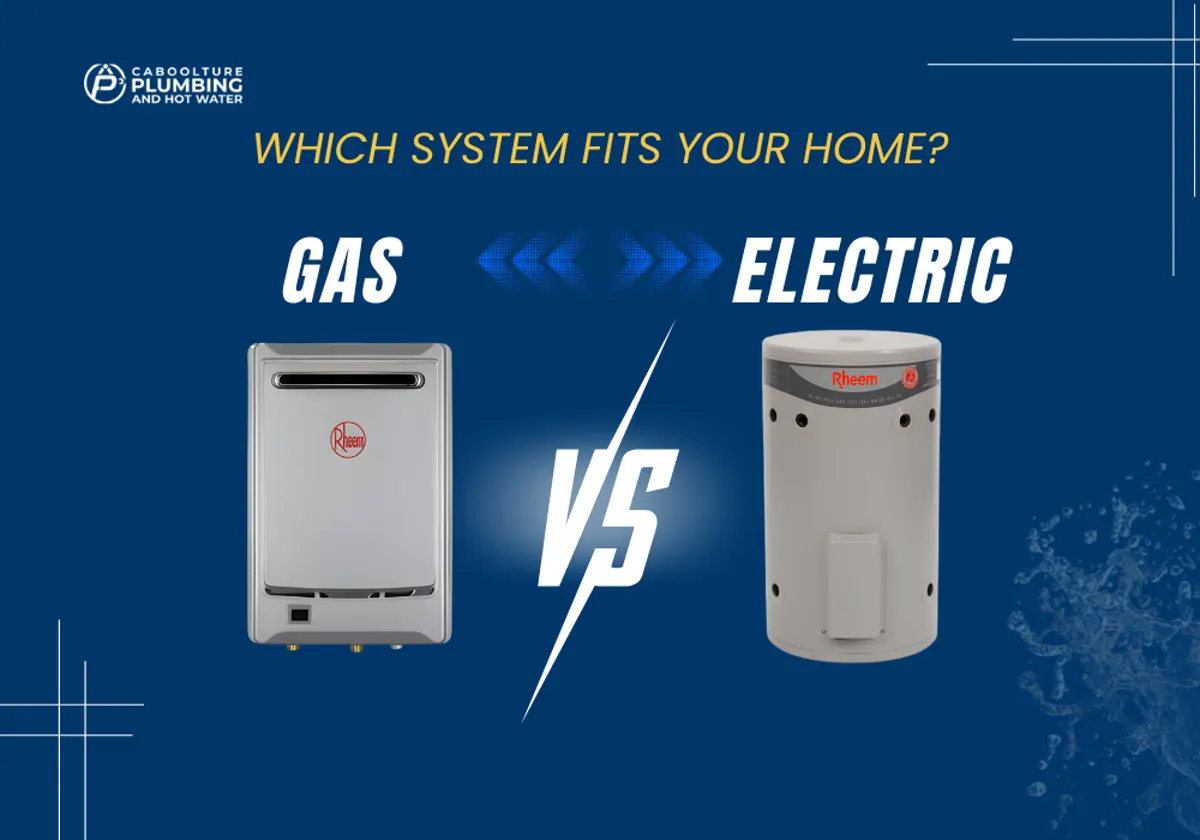
Why’s that? Because it isn’t a case of one option being clearly outdated and the other being clearly modern. Both are still common across South East Queensland homes today … although it’s definitely true that the ground is shifting somewhat. Electric systems – especially heat pumps – are becoming the more popular pick for new installations, while gas – once the default cost-saving choice – is losing a bit of ground as electricity prices ease and gas supply costs nationally trend upward.
But, as we weigh up gas hot water vs electric hot water, none of that means gas is a bad option per se. It just means the decision deserves more than a coin flip.
Do you even have the choice?
But before you get into cost comparisons, the first real question is simpler: can you actually get gas to your property?
Not every home in Caboolture and surrounding suburbs sits near a gas main, and a quick call to your local distributor or retailer will tell you whether your street is connected. If it’s not, bottled LPG is an option, but it runs noticeably more expensive per unit than mains gas, plus you’ll need outdoor space for the bottles and someone keeping an eye on supply.
And if you don’t have a connection, is it worth paying to add one? For most households, the answer in 2026 is … probably not.
New gas connections aren’t cheap to begin with, often running into the thousands once trenching and council requirements are factored in, and from October this year, new connection cost rules across parts of the network mean future connectors carry more of that cost themselves rather than spreading it across existing customers. If you’re starting from scratch, that math is harder to justify than it used to be.
So is sticking with electric a downside? Not really – not anymore.
Let’s look a little bit at gas vs electric hot water running costs. Because the old complaint about electric – slow recovery, higher running costs – applied mainly to older resistive storage tanks. Heat pump technology has closed a lot of that gap, and if you’ve got solar on the roof or you’re considering it, electric pulls further ahead.
The electric vs gas hot water system decision genuinely depends on what’s already running to your house, not which fuel is ‘better’ in the abstract.
5 Things That Decide The Gas Vs Electric Hot Water Debate
Once availability is sorted, it comes down to weighing up a handful of practical factors. Here’s what actually moves the needle when comparing gas vs electric hot water running costs for a typical Caboolture household.
1. Upfront cost
Standard electric storage tanks remain the cheapest system to buy and install, and if you’re replacing an existing electric unit, the swap is usually quick.
Gas systems generally sit in the middle price bracket, while heat pumps cost more initially but often claw that back through rebates.
2. Day-to-day running costs
This is where most people get surprised. Heat pumps now typically have the lowest running costs of any mainstream gas vs electric hot water heater option, often using 60 to 75 percent less energy than a standard electric tank.
Gas sits in the middle, and old-school electric resistive storage tends to be the most expensive to run on standard tariffs, though off-peak or controlled-load rates can narrow that gap considerably.
3. Speed & capacity
For busy households who hate running out of hot water mid-shower, continuous flow systems are appealing because there’s no tank to deplete.
Comparing instantaneous gas vs electric hot water units, gas continuous flow is the more established option in Australian homes and doesn’t demand the heavy electrical capacity that instantaneous electric units need, which can require upgraded wiring in older houses.
4. Solar compatibility
If you’ve got rooftop solar or you’re planning to install it, electric systems pull ahead fast. A heat pump running during daylight hours can use power that’s effectively costing you very little, something a gas system simply can’t take advantage of.
5. Cost of living & future-proofing
With household budgets under real pressure right now, it’s worth thinking past this year’s bill.
Gas prices on Australia’s east coast have been trending upward as supply tightens, and several states are actively moving away from new gas connections in housing.
Queensland hasn’t gone down the outright-ban route like Victoria, but the broader direction of travel matters if you’re planning to stay in your home for the next decade or more.
So, gas or electric for your home?
There’s no single right answer to the gas hot water system vs electric question, and that’s genuinely okay.
- If your home already has gas connected and your household goes through a lot of hot water, sticking with gas or upgrading to a more efficient gas continuous flow unit can still make sense.
- If you’re on electric already, especially with solar in the picture, a heat pump is hard to beat on long-term value.
- And if your current system has simply died and you’re deciding under pressure, going with whatever you already have connected is usually the fastest, least disruptive path.
What actually matters is matching the system to your household, not chasing whichever fuel sounds cheaper in a headline. If you’re weighing up an electric hot water system vs gas for your Caboolture property and want a straight answer based on your actual home, give Caboolture Plumbing and Hot Water a call. We’ll talk you through what’s realistic for your setup before you spend a cent.